How Many People Lived in Pula from 1563 to 1811? What Parish Registers Reveal
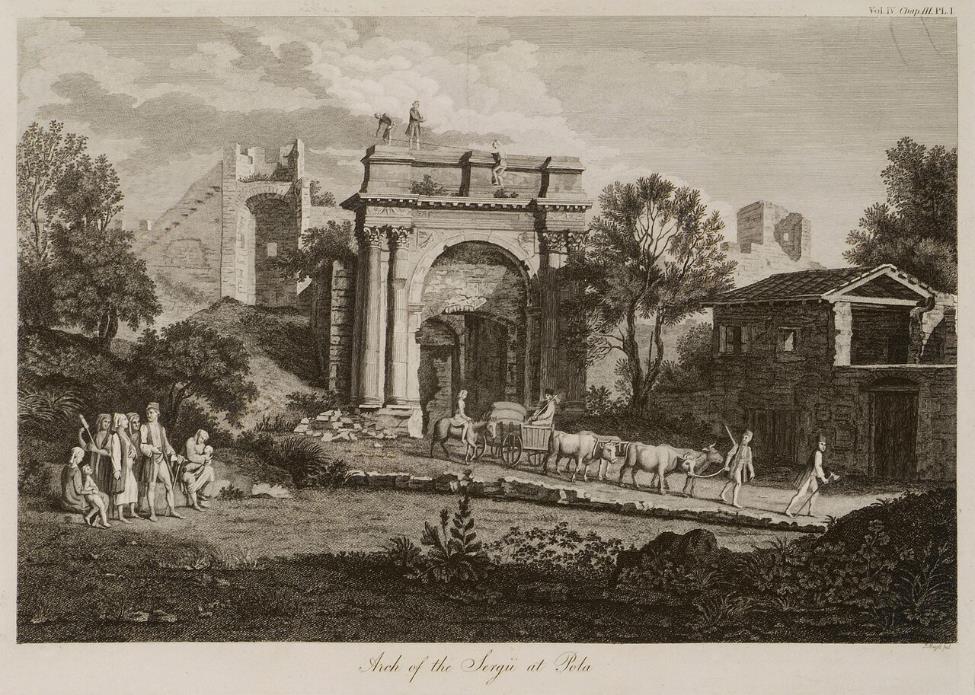
Pula’s Roman monuments stood much as they do today, yet in the spring of 1641 only 347 inhabitants lived among them—excluding the Venetian military garrison, government officials, and monasteries. How do we even know what the population of Pula was in the past, and how much can we trust those figures?
Centuries before the first modern censuses, no one counted citizens purely for statistical purposes. Still, valuable traces survived in the archives: parish priests, canons, and Venetian officials recorded residents for their own practical or ecclesiastical reasons. All baseline data and transcriptions of primary sources in this article are taken from historian Slaven Bertoša’s book Život i smrt u Puli (Life and Death in Pula, 2002), based on his detailed research of Pula’s parish registers at the State Archives in Pazin, drawing also on the foundational scholarship of his father, Miroslav Bertoša, a prominent Istrian historian and university professor. All percentages and ratios in this text are my own calculations, made by comparing the original figures and noting—wherever the records allow—who was left out of each count.
What “Censuses” in Parish Registers Actually Were
Early modern parish lists were not created for state statistics, but for everyday church administration: priests needed to know who had been baptized in the parish, who had received the sacrament of confirmation, who was old enough for Holy Communion, and who had been entered into the burial register. The entries themselves often reveal details of daily life that differ sharply from modern custom. From confirmation registers, for instance, we learn that people received the sacrament at vastly different ages: in June 1690, Bishop Corniani confirmed ten-year-old Marietta, daughter of the late Gregorio Lavezzari, whereas in August 1761, Bishop Balbi of Pula confirmed fifty-year-old Carlo Luzzianis of Vodnjan in his palace, with Pula’s Count-Proveditor Domenico Loredan serving as his sponsor.
Because these population counts were recorded incidentally—most often on the pages of confirmation registers (Elenco Cresimati), and less frequently in baptismal (Liber Baptizatorum) or burial registers (Liber Mortuorum)—there was no uniform template. Consequently, who was included in the final tally changed from one count to the next. Some lists omitted soldiers, Venetian administrators, and friars, while others left out the clergy and municipal clerks.
Nevertheless, in all counts from 1641 to 1682 that record a detailed breakdown of residents, a consistent pattern appears: alongside categories by sex and age (men, women, boys, and girls), inhabitants were divided into two sacramental groups—those eligible for Communion (da comunione) and those not yet eligible (non da comunione). Adding these two groups together always yields the total number of recorded souls. This simple rule will prove helpful when we examine an intriguing entry from the 18th century. All of this shows that while church figures reliably indicate the order of magnitude and overall trajectory, they cannot be mechanically added or subtracted as if they came from a single modern survey.
The 1611 Report: A Smaller Drop Than It Seemed
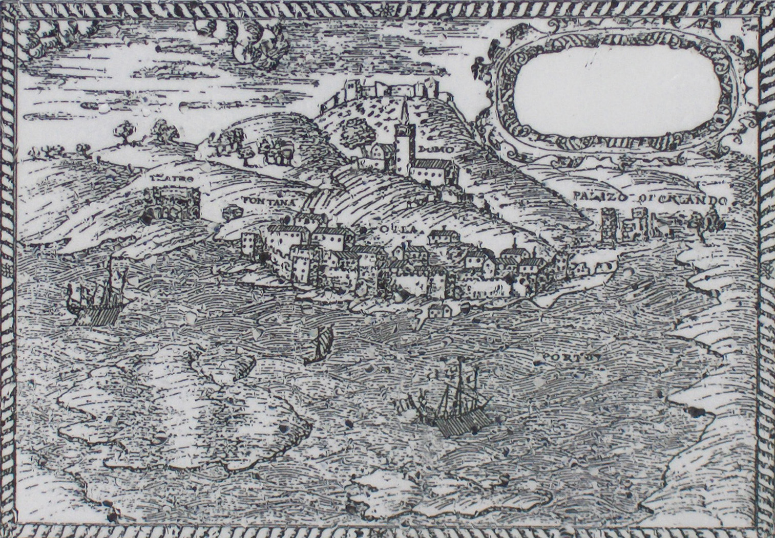

According to Miroslav Bertoša’s research, cited by Slaven Bertoša, the demographic crises between the 16th and 18th centuries left a far deeper mark on Pula than on other Istrian towns under Venetian rule. A comparative chart covering Muggia, Koper, Poreč, and Pula—compiled by M. Bertoša from earlier literature and his own research for the years 1554, 1666, 1699, and 1741—shows that Pula remained among the smallest Istrian towns throughout that entire period. Ravaged by wars, epidemics, and harsh living conditions, its development stalled as early as the first half of the 16th century. Once a commercial and export hub for its hinterland, the town was reduced to a waystation where Venetian ships sailing along the eastern Adriatic coast waited out the Kvarner bora winds.
The dire state of the town is vividly captured in a report sent on October 31, 1611, by Pietro Bondumier, Captain of Rašpor, to the Venetian Senate, published by Miroslav Bertoša in his 1979 study. Bondumier described Pula as a pitiful sight evoking compassion: many churches, houses, and grand monuments of a glorious past still stood, yet the town was nearly deserted and sinking deeper every day. He attributed the root of these misfortunes to the bad air prevailing in the town and its surroundings—a condition associated at the time with marshy ground and diseases such as malaria.
Bondumier backed his observations with concrete figures from earlier records and his own headcount:
- According to a 1563 survey compiled by fiscal advocate Dr. Sebastijan Bravi and Zan’Antonio L’Oche (engineer to the Proveditor for Uncultivated Lands), Pula had 200 hearths (households) and around 1,000 souls.
- In 1580, the Venetian Senate organized the settlement of 40 Malvasian families and 40 Cypriot families in the town.
- When Bondumier himself counted the inhabitants in October 1611, he found only 165 hearths and 538 souls, including 47 clergy. He concluded that the town had lost more than half of its population since 1563, adding that the few remaining residents were largely in very poor health.
These numbers warrant a closer look. A drop from 1,000 to 538 souls equals 46.2%—slightly less than half. More revealing, however, is that the number of hearths fell from 200 to 165 over the same period, a decline of only 17.5%. Such a wide gap between the drop in people and the drop in households suggests that the 1563 figure of “a thousand souls” was likely a rough administrative estimate obtained by multiplying 200 hearths by a round average of five people per household, whereas Bondumier’s actual count in 1611 revealed an average of just 3.26 people per hearth (or roughly three people per family once the 47 clergy are excluded).
Conditions in the town were undeniably grim, yet the actual drop in population was probably less steep than the captain claimed. On the other hand, the household figure is even more striking: even though Venice settled 80 new families in Pula in 1580, three decades after that colonization the town had 35 fewer hearths than in 1563. Slaven Bertoša also quotes a Venetian proveditor who called Pula an “abode of melancholy, disease, and death” (hospital infelicissimo di melancolia, malattia e morte). Examining migrations from the late 15th to the late 17th century, Miroslav Bertoša cautiously concludes that Pula would theoretically have ceased to exist without continuous immigration, demonstrating from archival records that Venetian colonization prevented the town’s extinction and sustained life within it.
The Lowest Point and Slow Recovery (1641–1682)
Six population counts from the 17th century survive in Pula’s parish registers: five in confirmation books and one in a baptismal register. The first four were compiled by the same man—Pula’s canon and parish priest Giacomo Bonarelli.
Bonarelli entered his first count on April 20, 1641. He recorded a total of 347 inhabitants divided into five categories: 11 canons, 83 men (including townsmen), 102 women, 78 boys (putti), and 73 girls (putte). By church criteria, 216 individuals were eligible for Communion and 131 were not (again totaling 347). Notably, the canon explicitly stated who was excluded from his count: the households of Venetian officials in the town, the entire military garrison (militia) with their families, other members of the Count-Proveditor’s court, and the residents of two male monasteries and one convent. It is therefore quite plausible that 1641 appears as the lowest point in the table partly because Bonarelli’s count covered a narrower segment of the population than Bondumier’s in 1611.
Because Bonarelli applied the same method and criteria in subsequent decades, his counts allow for a reliable comparison:
- May 12, 1643: 368 inhabitants were recorded—the number of adults dipped slightly compared to 1641, while the number of children increased.
- March 12, 1645: 361 individuals were counted.
- May 11, 1664: Bonarelli recorded 533 inhabitants; the number of canons remained at 11, while both adult civilians and children grew substantially. Compared to 1641, the civilian population had grown by nearly 54%.
Further recovery is confirmed by two additional counts from the second half of the 17th century. On April 1, 1674, Canon Domenico de Piazza entered a list into the baptismal register that is unfortunately not fully legible, though it records 541 people and mentions the Count-Proveditor as well as the residents of monasteries. Finally, on September 17, 1682, Canon and parish priest Liberal Vio compiled a new list totaling 696 people. Vio excluded clergy, the chancellor, and municipal officials from his tally, but specifically noted 165 heads of household (Capi di Casa) living in the town.
This detail reveals an interesting parallel: in 1682, Pula had the exact same number of families as Bondumier had counted hearths in 1611 (165), yet significantly more people now lived in them (an average of 4.2 members per family). Between 1641 and 1682, the population doubled according to parish records—not a sudden demographic boom, but a slow, steady recovery.
The 1732 Puzzle: 1,600 or 800 Inhabitants?
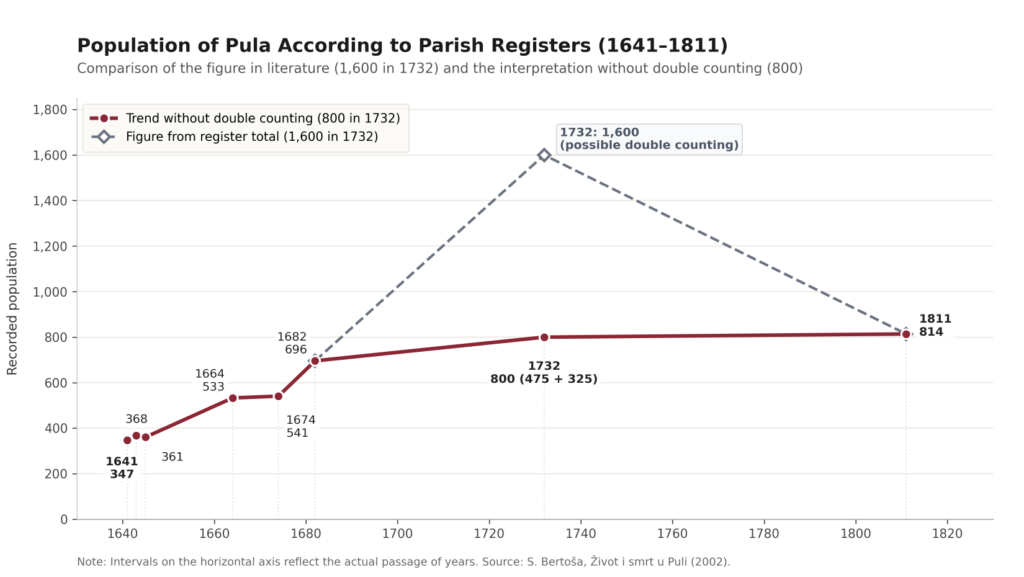
Only a single population count from the entire 18th century survives in Pula’s parish registers. On April 15, 1732, parish priest Niccolò Pianella, assisted by cleric Antonio Cipriotto, recorded it in the burial register. The entry lists 178 families and 800 souls, comprising 475 communicants and 325 confirmed persons, reading in the original Italian: “…178 famelgie fanno in tutto il numero di 800 anime di comunione quattrocento e settantacinque, di cresima trecentovinticinque – 1600 –”. At the very end of the entry stands the total 1,600, which Slaven Bertoša accepts in his text, table, and chart as Pula’s actual population that year.
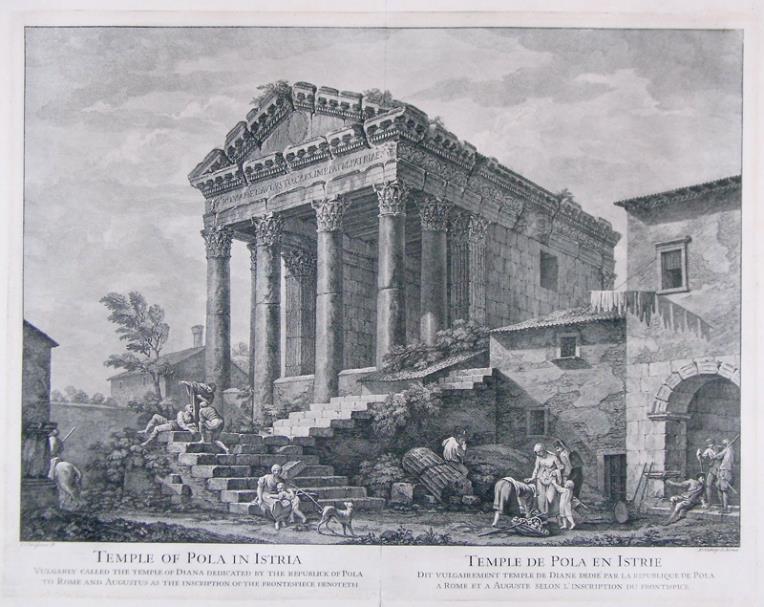

A closer reading of the entry, however, suggests that something in the arithmetic does not add up. Had 1,600 people truly lived in 178 families in Pula, each household would have averaged 9 members, compared to just over four in 1682. Moreover, as we have seen, in all counts from 1641 to 1682 where this breakdown is given numerically, the two church groups always add up to the total population (for example, 216 + 131 = 347 in 1641, or 423 + 273 = 696 in 1682). In Pianella’s entry, the sum of communicants and confirmed individuals is exactly 800 (475 + 325 = 800)—the very number of souls (800 anime) explicitly stated in the opening clause before the two groups are listed.
It is therefore possible that the final figure of 1,600 resulted from a summation error at the end of the entry (800 + 475 + 325 = 1,600), counting the same people twice—once as total souls in families and a second time through the ecclesiastical categories of communicants and confirmed residents. Without direct inspection of the original manuscript page, this cannot be confirmed with certainty; however, if the figure of 800 is accurate, Pula had a completely plausible average of 4.5 members per family in 1732, very close to that of 1682. This reading is further supported by Miroslav Bertoša’s chart on page 83 of the same book, which places Pula at roughly 700 inhabitants in both 1699 and 1741, with no sudden spike in the 18th century.
I should emphasize that this is my own reading of the transcribed entry rather than the book author’s conclusion, so I include both figures in the summary table and chart with an explanatory note. If 800 is indeed the true figure, both the inexplicable doubling in 1732 and the equally dramatic drop by 1811 vanish from the graph: instead, Pula grew gradually the entire time—from 347 (1641) through 696 (1682) and 800 (1732) to 814 inhabitants (1811).
The Early 19th Century and the Napoleonic Census (1811)
Between the turn of the 19th century and 1815, three further population entries appear in the registers. The first two were written into the confirmation book after an entry dated April 19, 1803, though they pertain to subsequent years and are not full town censuses. The first lists members of the Bentivoglio family (forty-year-old Giaccomo di Domenico of Vodnjan with his children) and spouses from the Fabbro family, followed by an annual tally of baptized boys and girls from 1804 to 1810 (extracted from the baptismal register), showing a total of 73 boys and 70 girls. The second is a partial list from 1814 naming 96 men in Pula along with their place of origin, age, and marital status.
For a complete demographic picture, the crucial document is the third record, compiled under French rule during the era of Napoleon’s Illyrian Provinces. On September 5, 1811, a comprehensive census (Anagrafi) of all souls “in the commune and suburb, young and old” was entered into the burial register. Pula then had a total of 814 inhabitants: 395 males and 419 females.
This census is particularly valuable because it cleanly separates residents of the town and suburb proper from tenant farmers (koloni) who lived and worked on the surrounding estates (stancije) belonging to four families:
- Town and suburb: 379 males and 407 females (786 inhabitants in total).
- Estate of the Kerševanić (Chersevani) family: 6 males and 2 females.
- Estate of the Marinoni family: 3 males and 2 females.
- Estate of the Demori family: 3 males and 2 females.
- Estate of the Artusi family: 4 males and 6 females.
Altogether, 28 tenant farmers (16 males and 12 females) lived on the four estates, which combined with the 786 residents of the town and suburb equals exactly 814 souls.
What It All Means
The summary table in Bertoša’s book calculates Pula’s total population growth from 1641 to 1811 (from 347 to 814 inhabitants, or +467 people) as an increase of 138.58% (the exact mathematical ratio of 467 to 347 is 134.58%). Because of the methodological differences described above, however, such a headline percentage should not be taken at face value. The 1641 count excluded the military, administration, and monasteries, whereas the 1811 census encompassed every inhabitant of the commune, suburb, and outlying estates. Since these counts do not measure the same categories of people, a direct percentage comparison between the first and last years can easily mislead the reader.
Reading old parish registers fairly requires looking at the entire trajectory rather than just two endpoints. And that trajectory is clear, imperfect as the sources may be: around 1,000 inhabitants in the 1563 estimate, a drop to 538 souls in 1611, a recorded low of 347 civilian residents in 1641, a steady recovery to 696 inhabitants in 1682, followed by 1732 (1,600 according to the book, and likely around 800 inhabitants), and 814 souls in September 1811. For a full two and a half centuries, Pula remained a small town mostly below a thousand inhabitants, nestled amid the monuments of its grand Roman past. True demographic transformation would arrive only in the mid-19th century, when Pula became the principal naval port of the Austrian Empire.
Overview of Records and the Population of Pula (1563–1811)
| Date | Recorded By | Souls | Families | Source Document |
| 1563 | S. Bravi & Z. A. L’Oche | approx. 1,000 | 200 | 1563 survey (via Bondumier) |
| Oct 31, 1611 | Captain P. Bondumier | 538 | 165 | Report to the Senate |
| Apr 20, 1641 | Canon G. Bonarelli | 347 | — | Confirmation Register |
| May 12, 1643 | Canon G. Bonarelli | 368 | — | Confirmation Register |
| Mar 12, 1645 | Canon G. Bonarelli | 361 | — | Confirmation Register |
| May 11, 1664 | Canon G. Bonarelli | 533 | — | Confirmation Register |
| Apr 1, 1674 | Canon D. de Piazza | 541 | — | Baptismal Register |
| Sep 17, 1682 | Parish Priest L. Vio | 696 | 165 | Confirmation Register |
| Apr 15, 1732 | Parish Priest N. Pianella | 800 (1,600) | 178 | Burial Register |
| Sep 5, 1811 | Burial register census | 814 | — | Burial Register |
Notes on individual counts in the table:
- 1563: The figure of 1,000 souls was likely a rough estimate derived from 200 hearths.
- 1611: Includes 47 clergy; counted following the settlement of 80 Malvasian and Cypriot families in 1580.
- 1641–1664: Exclusions (the militia with their families, Venetian officials, the Count-Proveditor’s court, and two male monasteries plus one convent) are explicitly stated for 1641, and the book notes the same criteria for 1643. Category breakdowns for the remaining three years are: 1643 (11 canons, 76 men, 95 women, 104 boys, and 82 girls; 225 for Communion, 143 not); 1645 (11 canons, 81 men, 96 women, 102 boys, and 71 girls; groups of 223 and 138 persons); 1664 (11 canons, 123 men, 149 women, 155 boys, and 95 girls; groups of 342 and 191 persons).
- 1674: The entry is not fully legible and mentions the Count-Proveditor as well as the number of residents in monasteries.
- 1682: Excludes clergy, the chancellor, and officials; lists 209 men, 214 women, 129 boys, and 144 girls (groups of 423 and 273 persons). The book’s main text and summary table state 1682 (18 years after 1664), whereas footnote 293 cites the year 1689.
- 1732: The entry records 800 souls (475 communicants + 325 confirmed = 800), with a final sum of 1,600 appended at the end—a likely result of double counting.
- 1811: Of the 814 inhabitants, 786 lived in the town and suburb (379 males and 407 females per the transcribed register; the accompanying commentary on p. 87 states 363 and 395 because the tenant farmers were subtracted twice), while 28 were tenant farmers on the estates of the Kerševanić, Marinoni, Demori, and Artusi families.
If you would like to see how these numbers played out in the everyday lives of Pula’s residents at the time, read more about the beginnings of population record-keeping in Pula, as well as the human stories preserved in records of unusual godparenthoods in the 18th century and Pula’s marriage registers from 1613 to 1815.
Sources and Literature
- Slaven Bertoša, Život i smrt u Puli. Starosjeditelji i doseljenici od XVII. do početka XIX. stoljeća [Life and Death in Pula: Natives and Immigrants from the 17th to the Early 19th Century], Pazin: Skupština Udruge Matice hrvatske Istarske županije, 2002, pp. 82–88 (original baptismal, confirmation, and burial registers are preserved at the State Archives in Pazin).
- Cited via Slaven Bertoša: Miroslav Bertoša, “Prebivalište melankolije, bolesti i smrti,” Istra 4, Pula 1979, pp. 33–45; Miroslav Bertoša, Istra: Doba Venecije (XVI.–XVIII. stoljeće), Pula 1995; Egidio Ivetić, La popolazione dell’Istria nell’età moderna. Lineamenti evolutivi, Trieste–Rovigno 1997; Ivan Erceg, “Dva i pol stoljeća kretanja stanovništva Istre (1554.–1807.),” Gunjačin zbornik, Zagreb 1980, pp. 229–250; Giovanni Bossi, “Cenni sulla popolazione della città di Pola nel secolo XVI e nei successivi,” AMSI XXII, Parenzo 1907, pp. 463–470; Bernardo Benussi, “Spigolature polesane,” AMSI XXIII, Parenzo 1908, pp. 388–391, 424.